
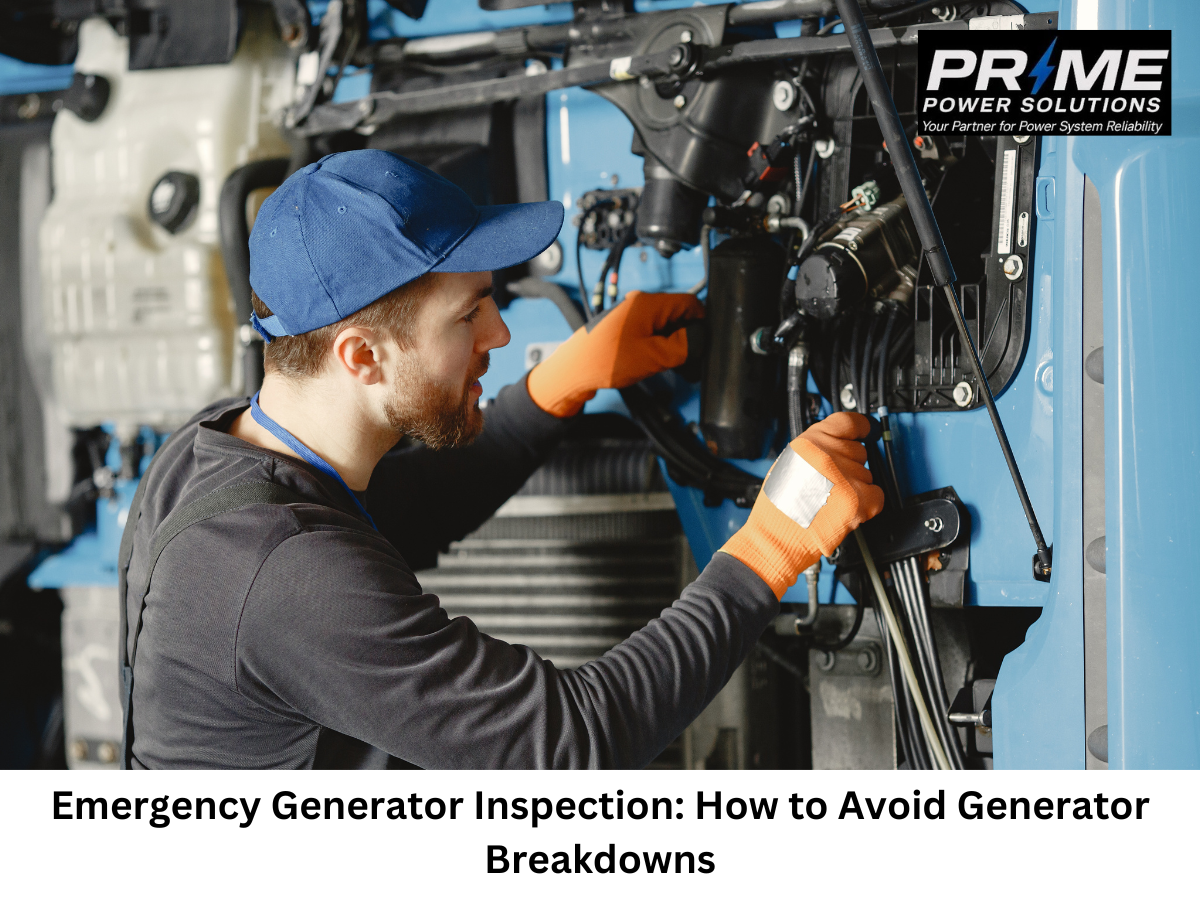
There’s a reason people say you never really know if your generator works until the power goes out. For most facilities, a backup generator sits quietly in the corner, untouched for weeks or months at a time, and that’s precisely where the problem starts.
When the lights go out, and you flip the switch, the last thing you want is a machine that refuses to cooperate. Yet generator failures happen all the time, and in most cases, they aren’t sudden. The warning signs were there long before the breakdown. They just weren’t caught in time.
A proper emergency generator inspection can be the difference between a minor inconvenience and a full-scale operational crisis. In this guide, we’ll walk through why generators fail, what inspectors look for, and what you can do to prevent costly breakdowns before they happen.
Why Generators Fail More Often Than You’d Think
Generators are built to be reliable, but reliability isn’t the same as invincibility. These machines are designed for periodic, heavy-duty use, not to sit idle for long stretches and then suddenly run at full load. When that’s exactly what they’re asked to do, problems surface fast.
The thing is, most generator failures aren’t random. They follow predictable patterns, almost always tied to the same handful of root causes. Understanding those causes is the first step toward preventing them.
The Most Common Reasons Generators Break Down
1. Battery Failure
Battery failure is the single most common reason a generator won’t start. This might seem surprising because a generator’s battery isn’t powering anything significant during standby. But batteries degrade naturally over time, and there are two specific problems that crop up again and again.
The first is loose or corroded connections. Vibration, temperature swings, and simple aging cause terminal connections to work themselves loose. When that happens, the battery can’t deliver the burst of power needed to crank the engine.
The second is sulfation, a condition where lead sulfate crystals build up on the battery plates. This happens when a battery sits in a partially discharged state for too long, which is exactly the situation you get with a generator that’s rarely used. Sulfation reduces the battery’s capacity and, if left unchecked, eventually makes it useless.
The fix is straightforward: inspect the battery during every maintenance visit, check the connections, test the charge, and replace the battery on a regular cycle rather than waiting for it to fail.
2. Cooling System Problems
Generators produce a tremendous amount of heat when running. The cooling system, which typically uses liquid coolant circulated through the engine, is what keeps temperatures in a safe range. When coolant levels drop too low or when the coolant degrades and loses its effectiveness, the generator’s built-in protection systems kick in and shut the machine down before it overheats.
That’s a safety feature, but it means your generator just went offline exactly when you needed it most.
Coolant leaks can develop from deteriorated hoses, loose fittings, or cracks in the system over time. In cold climates, coolant that hasn’t been properly maintained can also freeze, which causes its own set of problems. Regular checks of coolant levels and condition, along with inspection of hoses and connections, catch these issues before they become emergencies.
3. Fuel Leaks
Fuel leaks are often detectable by smell alone during a routine walkthrough, which is one of the reasons regular maintenance visits matter so much. A technician who walks into the generator room and catches the faint scent of diesel can trace and fix a leak before it becomes a hazard.
When a leak is discovered while the generator is actually running, the likely culprits are a malfunctioning fuel pump or a cracked fuel line. Either one can cause the engine to run lean, meaning not enough fuel reaching the cylinders, or create a fire risk if fuel contacts hot surfaces.
Some leaks are slow and hard to notice without a proper inspection. That’s why looking at hoses, fittings, and fuel filters, not just the tank itself, is part of any thorough generator check.
4. Oil Leaks and Wet Stacking
Oil leaks in generators are frequently connected to a condition called wet stacking. This happens when a generator runs at a load that’s too low for too long, which is a common scenario during routine monthly test runs that aren’t long enough or demanding enough.
When a diesel engine doesn’t run at a proper load, it doesn’t burn fuel cleanly. Unburned fuel, oil, and carbon deposits accumulate in the exhaust system and can work their way back into the engine. Over time, this contributes to carbonized fuel injectors, excessive oil consumption, and visible black residue in the exhaust.
Beyond being messy, wet stacking degrades engine performance and shortens component life. The solution involves proper load testing, using a load bank if necessary, and ensuring that fuel injectors and crankcase breathers are inspected regularly.
5. Control Panel and Settings Errors
This one is probably the most frustrating cause of generator failure because it has nothing to do with mechanical wear. It’s entirely preventable with proper procedures.
Many generators fail to start because the control panel was left in the wrong mode after a maintenance visit or a manual test run. If a technician switches the generator to manual mode for testing and forgets to return it to automatic mode before leaving, the generator won’t respond when an outage triggers the automatic transfer switch.
Similarly, after a fault shutdown where the generator shuts itself off due to a detected problem, control panels often require a specific reset sequence. If that sequence isn’t followed correctly, the generator stays locked out.
Building a checklist into every maintenance and testing procedure, and verifying control settings before leaving the site, eliminates this problem almost entirely.
6. Fuel Bleed-Back
Fuel bleed-back is a less commonly discussed problem, but it causes real headaches. Under normal operation, fuel flows from the tank to the engine through the fuel line. But if there’s air in the injection system or if check valves are faulty, fuel can drain back into the tank when the generator is off.
When the generator tries to start, it behaves as if the fuel tank is empty. The engine cranks but won’t fire because there’s no fuel in the lines. Bleeding the air out of the system and replacing faulty check valves resolves the issue, but diagnosing it in the middle of an emergency takes time you probably don’t have.
7. Empty Fuel Tank
It sounds almost too simple, but generators run out of fuel more often than most facility managers would expect. The usual culprit is a faulty or stuck fuel gauge that shows an inaccurate level. When a technician checks the gauge and sees a reasonable reading, they may not physically verify the actual level. If the gauge is wrong, the tank may be nearly empty.
The other contributing factor is running regular test cycles without accounting for fuel consumption. If a generator is tested monthly but fuel is only checked quarterly, it’s easy for the level to drop below what’s needed for a sustained outage.
The fix is simple: verify fuel levels directly, not just by reading the gauge, and make fuel checks a mandatory part of every inspection visit.
What a Proper Emergency Generator Inspection Covers
Now that you understand what can go wrong, it’s worth knowing what a thorough inspection actually looks like. A professional inspection isn’t just a visual glance at the machine. It’s a systematic check of every system that affects generator reliability.
Engine and Mechanical Systems
A complete engine inspection covers oil level and condition, any signs of leakage, coolant level and hose integrity, air filter cleanliness, fuel system integrity, including lines and check valves, and the exhaust system for blockages or excessive carbon buildup.
Electrical Systems
On the electrical side, a technician should check battery voltage, run a load test, inspect connection tightness, test the starter motor, verify charging system output, confirm control panel settings and operational mode, and test the transfer switch function and timing.
Fuel System
The fuel inspection goes beyond just looking at the gauge. It should include a physical tank level check, gauge accuracy verification, an assessment of fuel condition since diesel can degrade and develop microbial contamination over time, and a leak check across all connections and lines.
Functional Test
Any inspection worth doing includes actually running the generator, not just for a few minutes, but long enough to confirm it reaches operating temperature and performs under load. A 30-minute minimum run under at least 30% of rated load is a reasonable standard. Load bank testing is the most reliable way to verify performance if the facility’s actual load isn’t sufficient.
How Often Should You Inspect Your Generator?
The short answer is more often than most people do.
On a weekly basis, a visual inspection takes only a few minutes and catches obvious issues like fluid leaks, unusual noises, or warning lights on the control panel.
Every month, the generator should be run under load for at least 30 minutes. Fluid levels should be checked, the battery inspected, and control settings verified.
On a quarterly schedule, a more detailed inspection should cover filters, belts, hoses, and transfer switch function.
Once a year, a comprehensive service by a qualified technician should include load bank testing, oil and coolant changes, fuel analysis, and a full systems review.
The cost of regular maintenance is a fraction of what an emergency inspection costs, and emergency inspections still don’t guarantee a fast repair. When a technician has to diagnose an unfamiliar problem on a machine that hasn’t been serviced in years, the process takes significantly longer and the parts may not be readily available.
The Real Cost of Skipping Maintenance
Here’s a practical way to think about it. An emergency generator inspection, by definition, happens when something has already gone wrong. The generator is down, the power is out, and you’re paying emergency rates for a technician to diagnose and repair the problem, which could take hours or days, depending on what failed and what parts are needed.
Routine maintenance catches the same problems early, like a loose battery terminal, a slow coolant leak, or a fuel gauge that’s drifting, when they’re cheap and easy to fix. The difference in cost between a preventative maintenance visit and an emergency repair, plus the downtime costs for the facility, can be significant.
For industries like healthcare, data centers, or manufacturing, where an unexpected power outage carries serious financial and safety consequences, that math becomes very clear very quickly.
Tips to Keep Your Generator Ready at All Times
Keep a generator log. Record every inspection, test run, repair, and fuel top-off. This creates a history that helps technicians spot patterns and catch problems early.
Don’t skip the transfer switch. The transfer switch is what actually connects your generator to the building when the grid goes down. It needs to be tested as part of every monthly exercise.
Treat fuel like a perishable. Diesel fuel degrades, especially in hot climates or when stored for long periods. Use fuel stabilizers, rotate stock, and consider professional fuel polishing if the tank hasn’t been turned over in more than 12 months.
Know your load requirements. Running a generator significantly below its rated capacity leads to wet stacking. Know what load your facility actually puts on the machine and make sure test runs reflect that.
Have a service contract in place before you need it. Emergency service from an unfamiliar provider takes longer and costs more. A relationship with a qualified generator service company means faster response times and a technician who already knows your equipment.
Conclusion
A generator that fails during an emergency isn’t just inconvenient. Depending on what your facility does, it can be genuinely dangerous. The good news is that generator failures are almost entirely predictable and preventable. Battery failure, cooling issues, fuel problems, and control errors don’t happen overnight. They develop gradually, and a consistent inspection routine catches them long before they become critical.
If your generator hasn’t been professionally serviced recently, now is the right time to schedule an inspection, not when the next storm rolls through, and you’re hoping it starts. A thorough emergency generator inspection today is the most straightforward way to make sure you’re not scrambling for a solution when you can least afford it.
Don’t wait for the power to go out to find out if your generator is ready. Have it inspected, tested, and serviced on a regular schedule.